As fall approaches, I spent the last few weeks around town capturing some of the last flowers of the season. This month’s collection features a mix of native plans and others that bloom later in the season than others:
Common Evening Primrose
Virgin's Bower
Common Hibiscus
Common Mallow
White Snakeroot
Arrowleaf Aster
Shining Aster
Blue Wood Aster
New England Aster
Garden Dahlia
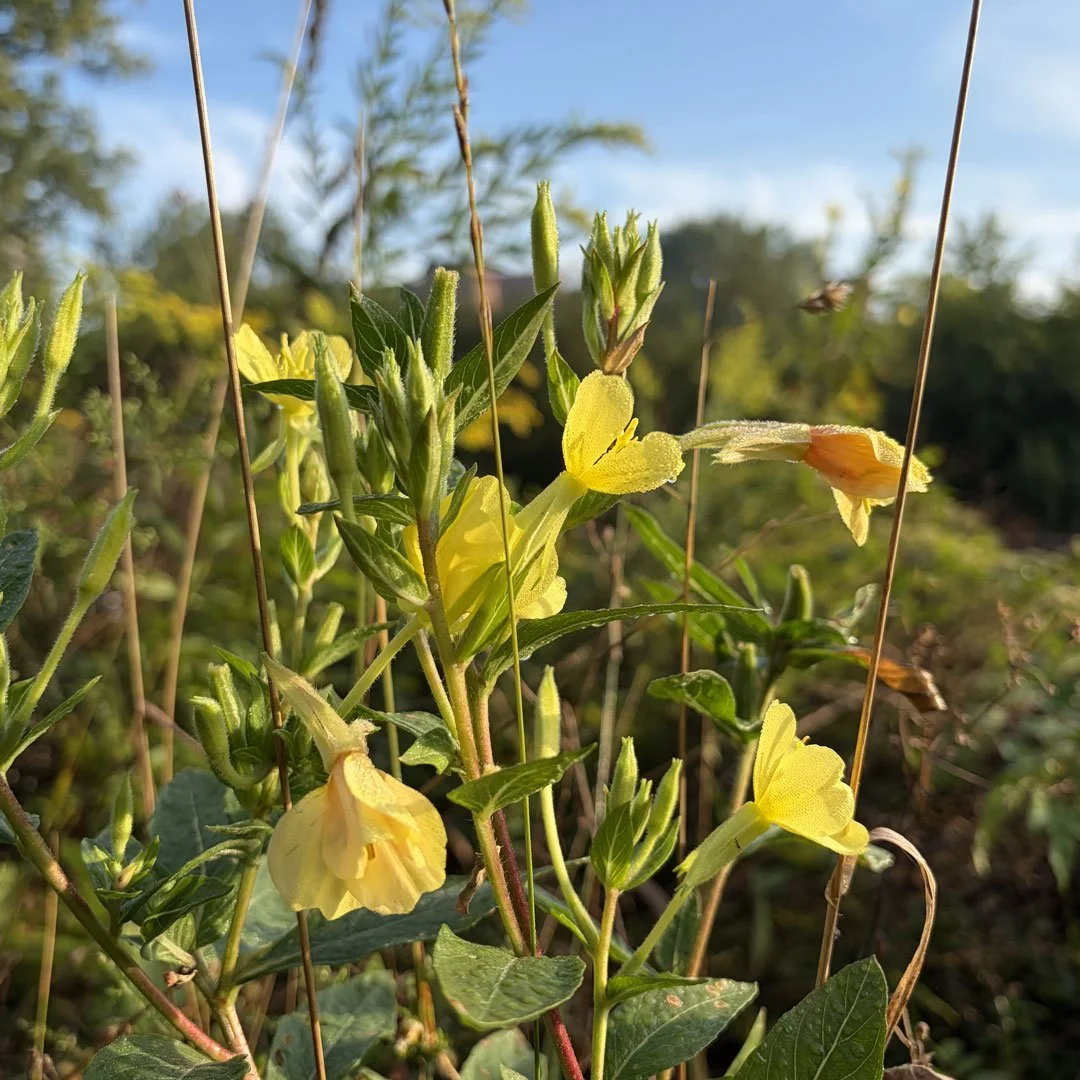
Common Evening Primrose
Common Evening Primrose
Oenothera biennis
A biennial that spends its first year as a low rosette of leaves, then sends up an erect, often reddish stem 2 to 6 feet tall in its second year. The leaves are narrow and oval with a pale midvein running down the center. Flowers are yellow, four-petaled, and open in the evening — a trait that gives the plant its name.
Native to Michigan, found in nearly every county in the state.
Source: Michigan Flora Online
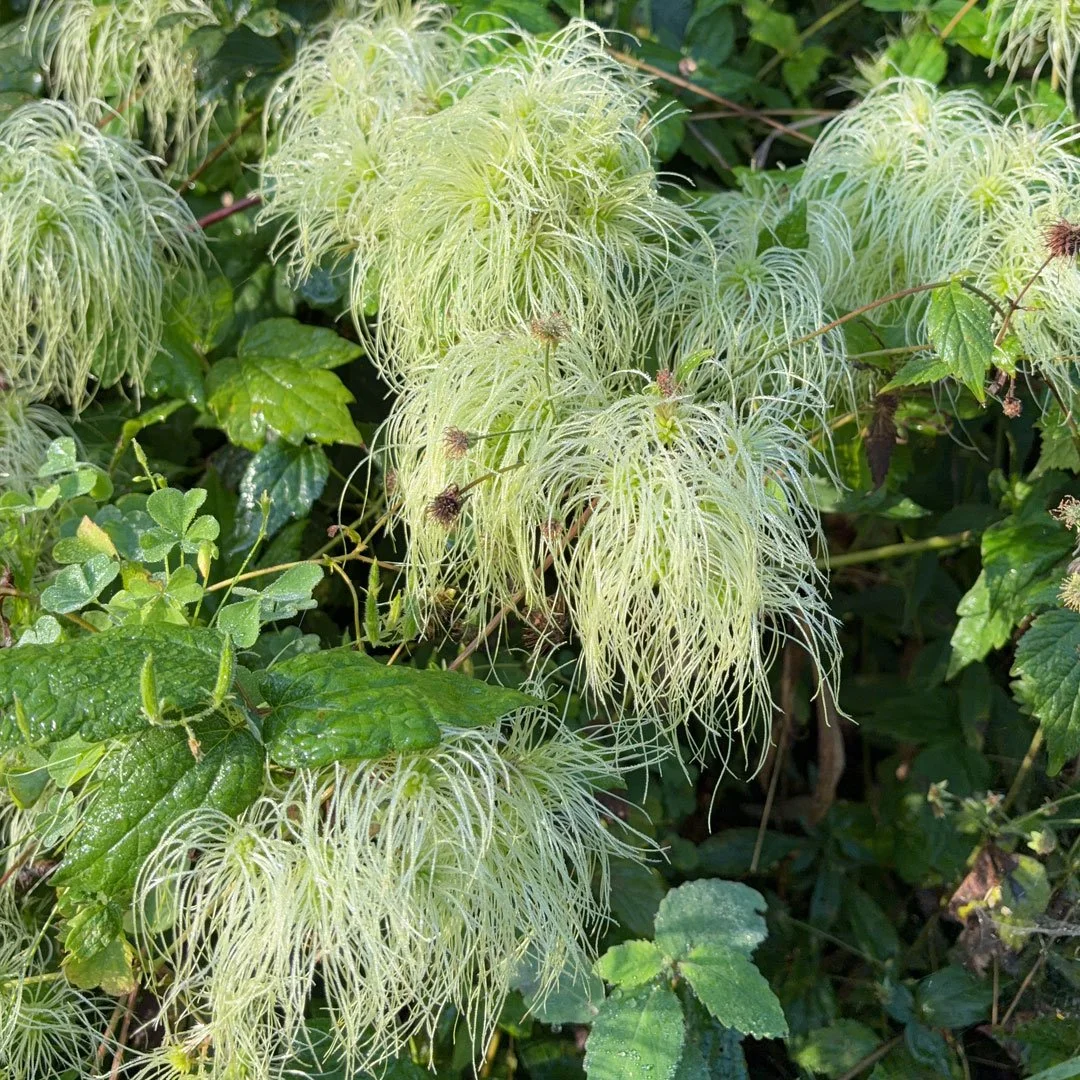
Virgin’s Bower
Virgin's Bower
Clematis virginiana
A climbing, twining vine that can stretch 10 to 20 feet along a fence, shrub, or tree. The leaves are opposite and compound, usually split into three toothed leaflets. In late summer it's covered in small, fragrant white flowers, followed by feathery seed heads that persist into fall.
Native to Michigan, recorded in most of the state's counties.
Source: Michigan Flora Online
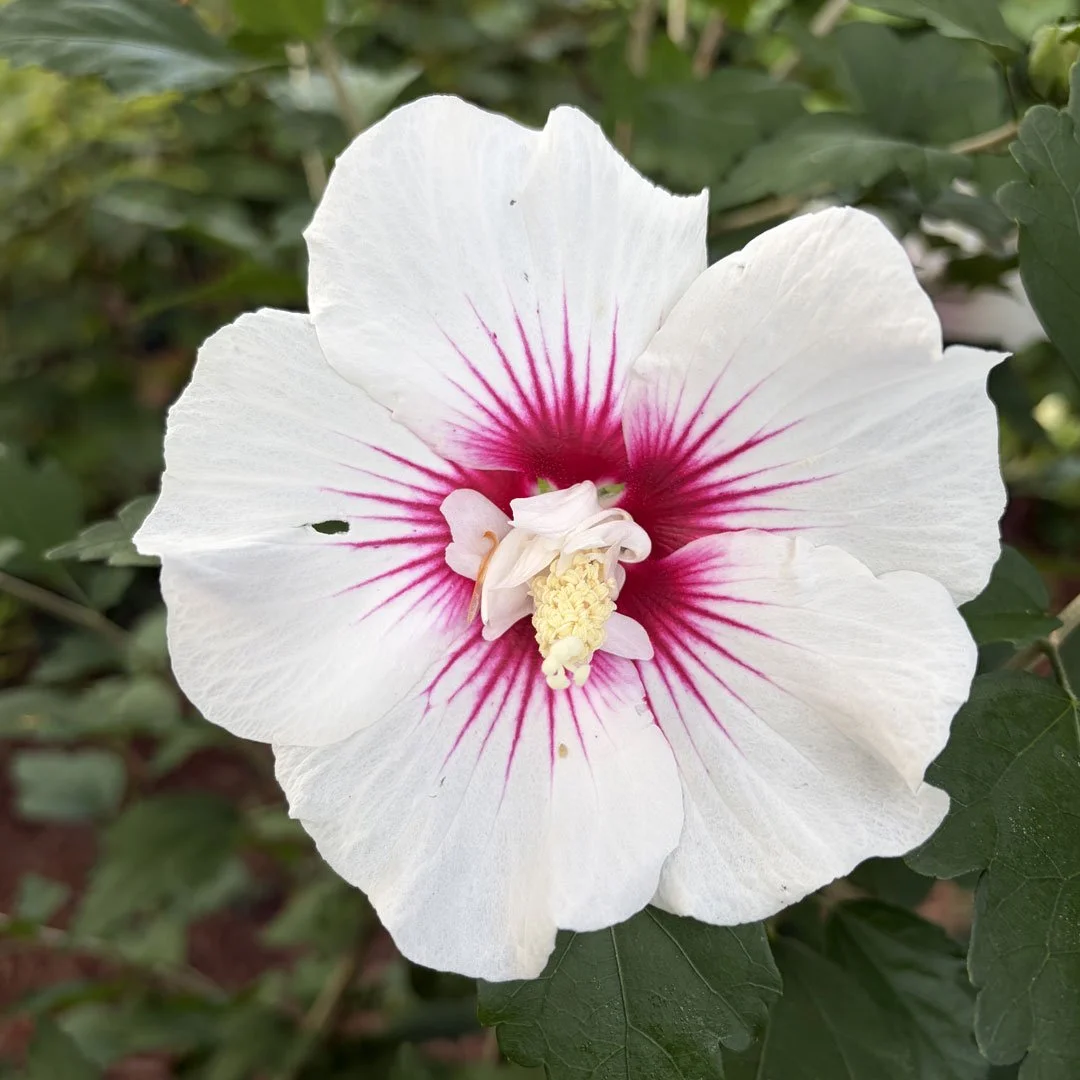
Common Hibiscus
Common Hibiscus
Hibiscus moscheutos
A tall, sturdy perennial reaching 4 to 8 feet, with broad, toothed, heart-shaped leaves. The flowers are the standout feature — up to 8 to 10 inches across, white, pink, or red, usually with a deep crimson center.
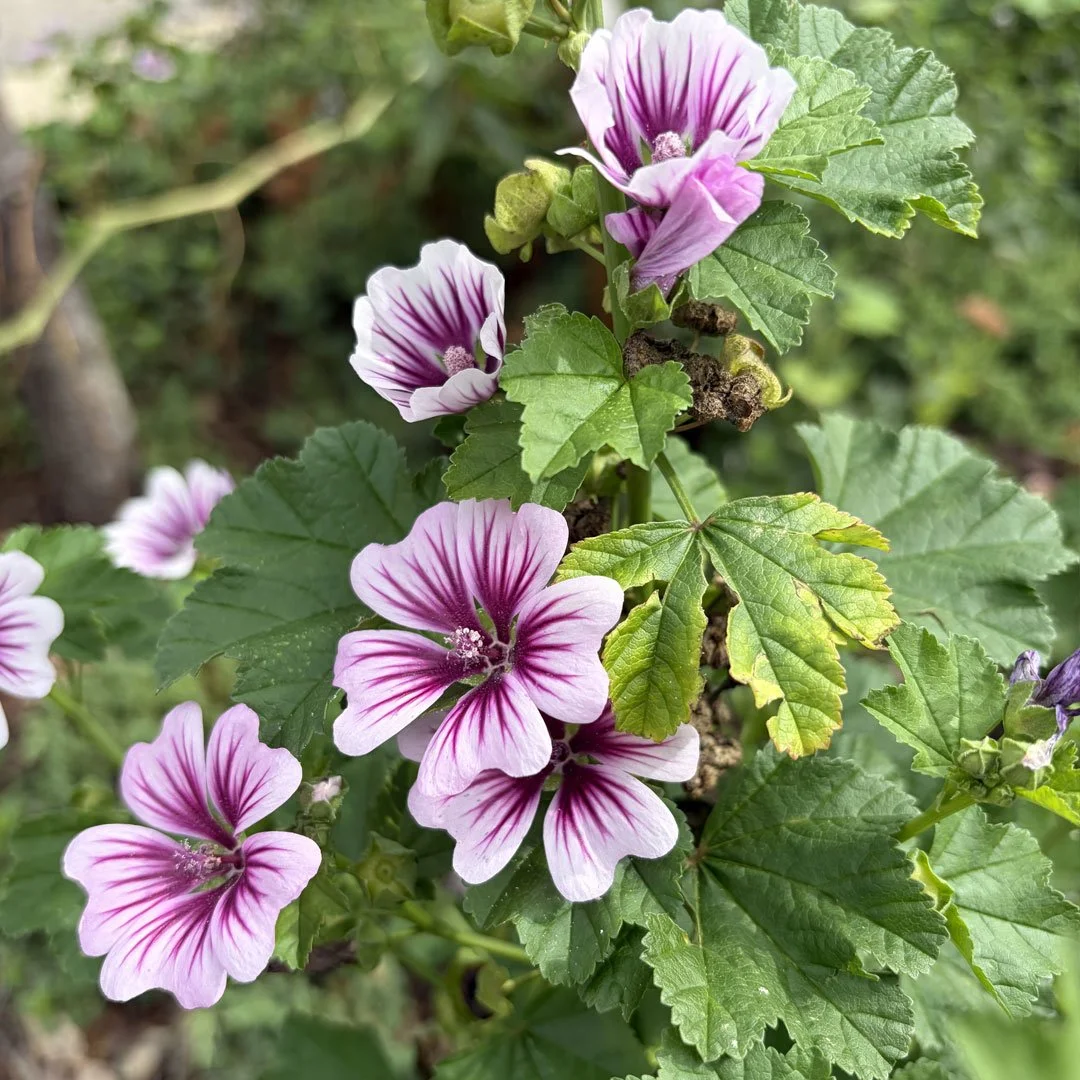
Common Mallow
Common Mallow
Malva neglecta
A low, sprawling plant with rounded, kidney-shaped leaves on long stalks and small five-petaled flowers in white or pale lilac with darker veins. The seed pods are flattened and disc-shaped, like a tiny wheel of cheese.
Source: Michigan Flora Online
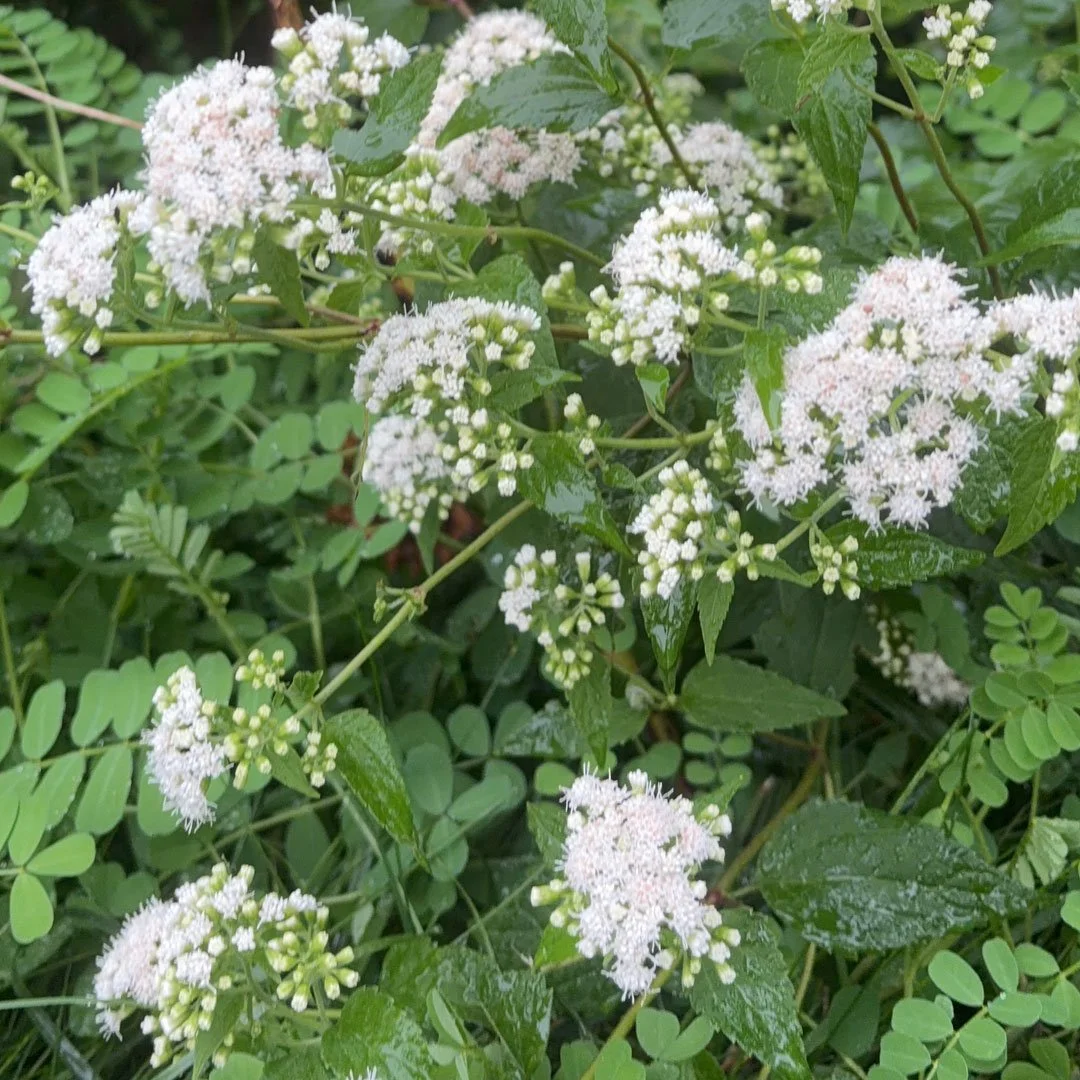
White Snakeroot
White Snakeroot
Ageratina altissima
A woodland perennial growing 1 to 4 feet tall, with opposite, sharply toothed leaves and flat-topped clusters of small white flowers that bloom late in the season, often into October. All parts of the plant are toxic to livestock and humans. Native to Michigan. Its toxicity is historically significant here: cattle that grazed on it passed the poison into their milk, causing "milk sickness" among early Midwest settlers unfamiliar with the plant.
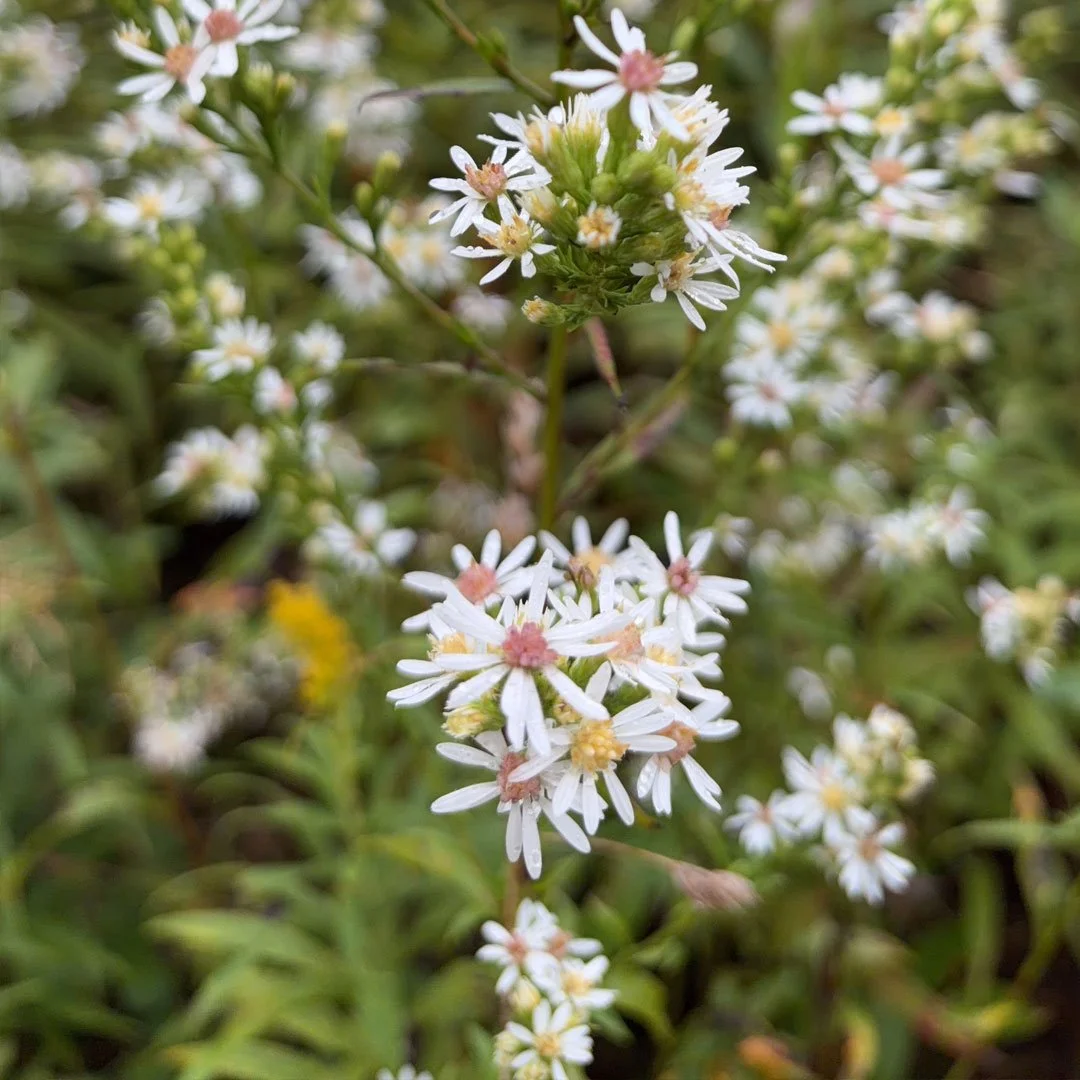
Arrowleaf Aster
Arrowleaf Aster
Symphyotrichum urophyllum
A perennial growing 1 to 4 feet tall in clumps of upright stems. Its broad, arrow-shaped leaves have a distinctly winged leaf stalk. In late summer and fall it produces dense, pyramidal clusters of white (occasionally pale blue) daisy-like flowers.
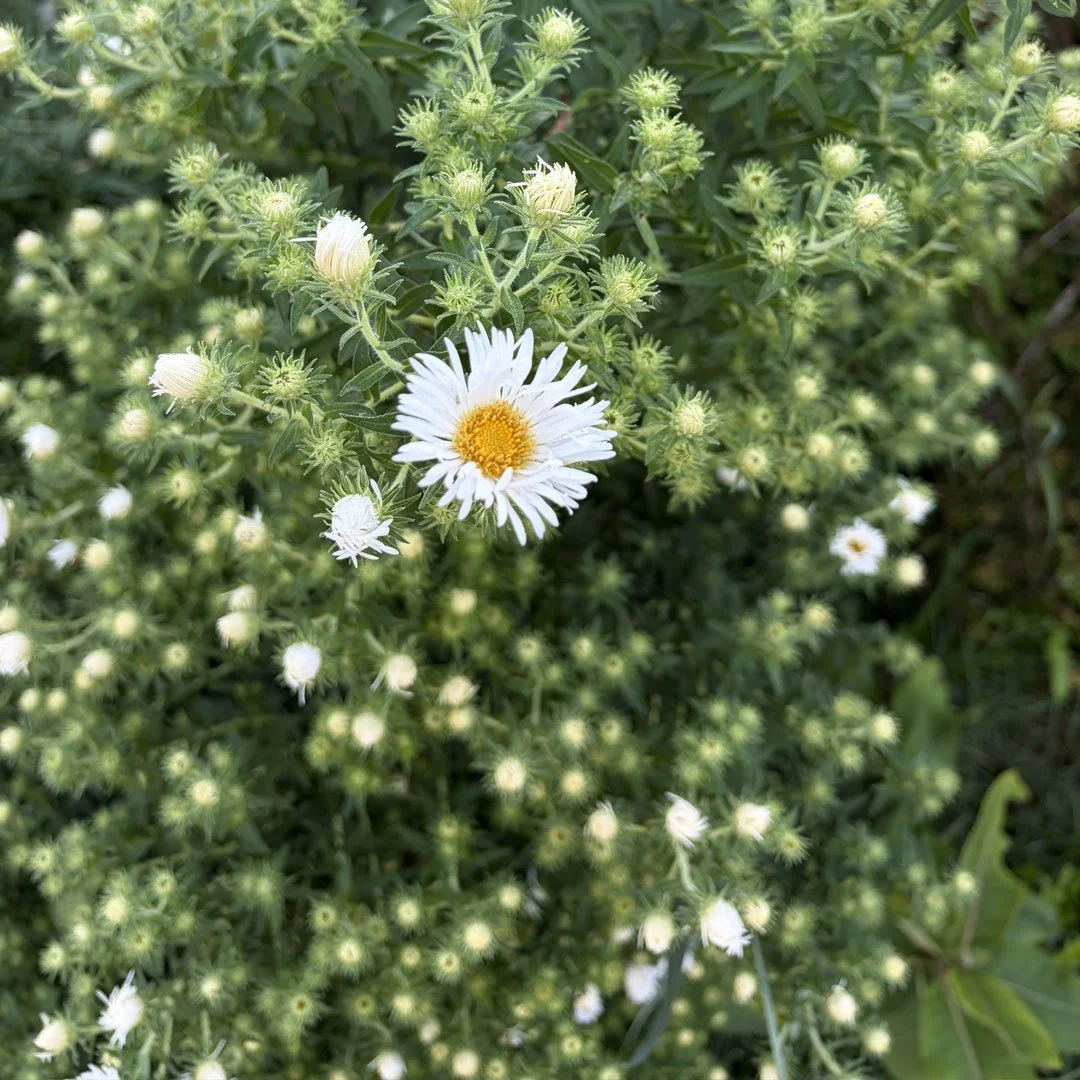
Shining Aster
Shining Aster
Symphyotrichum firmum
A tall perennial reaching up to 7 feet, with smooth, glossy, lance-shaped leaves that clasp the stem. Flowers are violet to pale blue or nearly white, blooming from August into October in wet meadows and along stream banks.
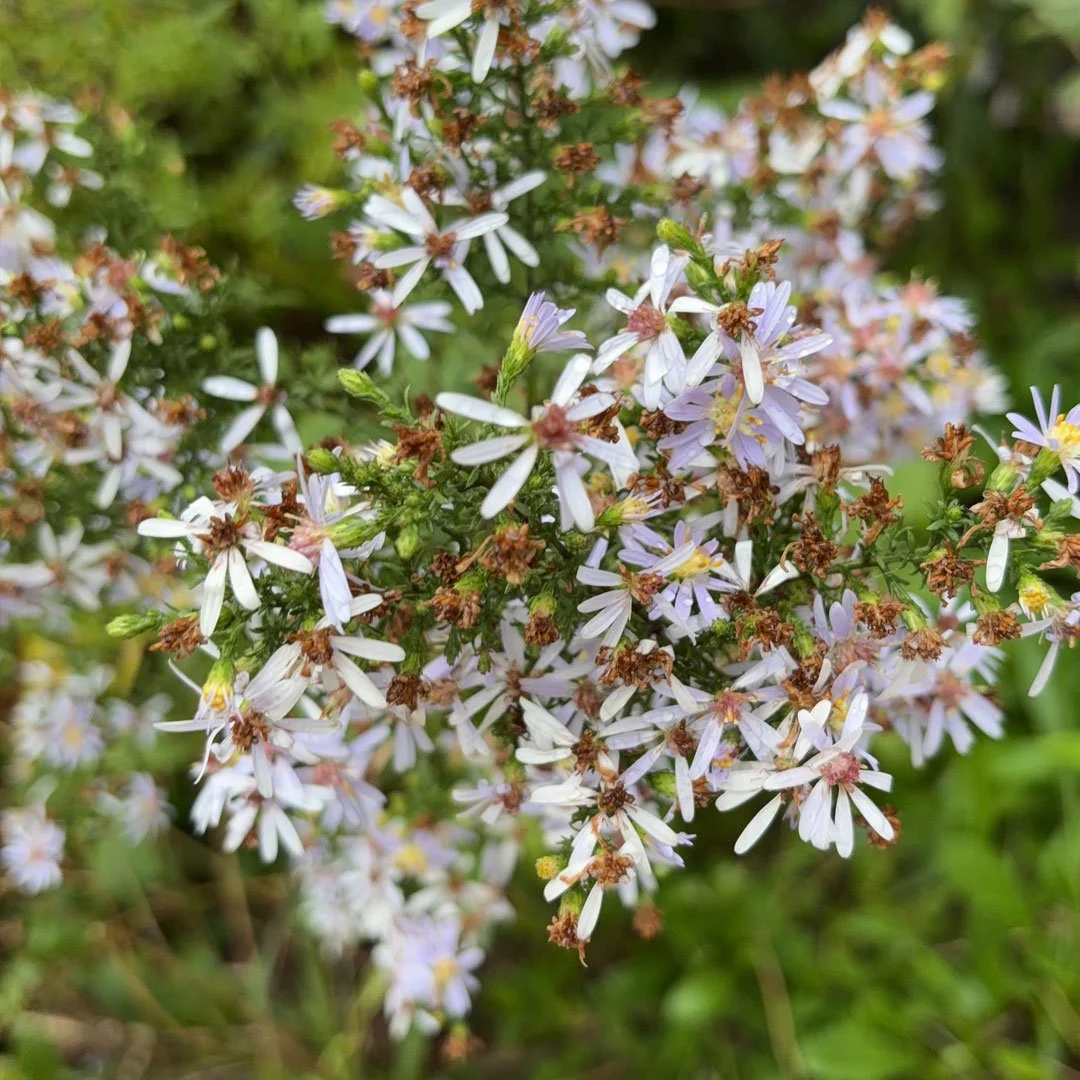
Blue Wood Aster
Blue Wood Aster
Symphyotrichum cordifolium
A shade-tolerant perennial, 1 to 4 feet tall, with heart-shaped, coarsely toothed leaves lower on the plant. In fall it produces loose, branching clusters of small pale blue to lavender flowers — one of the last splashes of color in a shaded woodland.
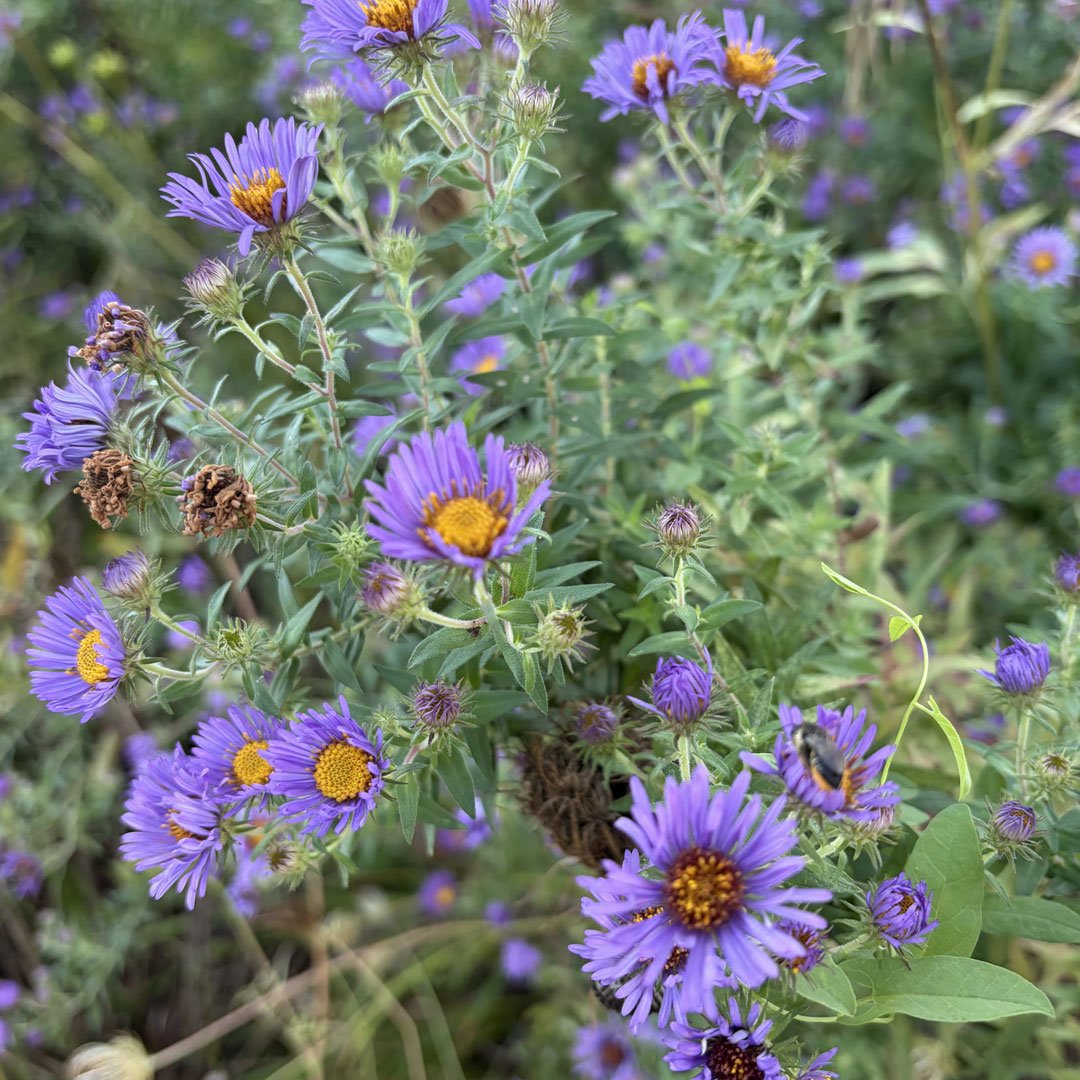
New England Aster
New England Aster
Symphyotrichum novae-angliae
One of the tallest native asters, growing 3 to 7 feet, with hairy stems and narrow, clasping leaves. Its flowers are large and showy, deep purple to rose-pink with a yellow center, blooming from August into fall. One of the state's more common and showy native asters. It was also used by Native American communities in the region for a variety of medicinal purposes.
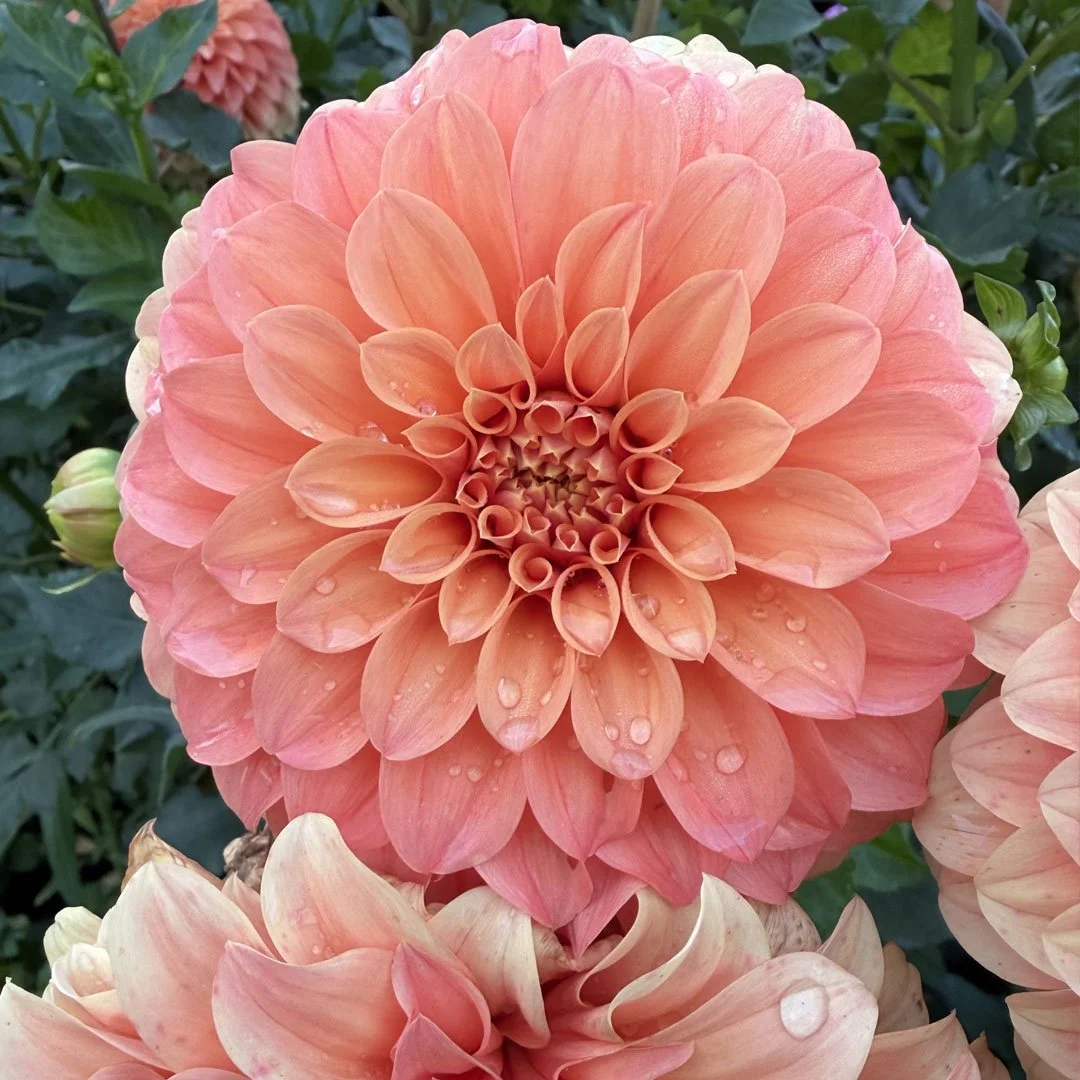
Garden Dahlia
Garden Dahlia
Dahlia pinnata
An erect perennial growing 3 to 5 feet tall from tuberous roots, with divided, toothed leaflets. The flower heads are large and showy, 2 to 4 inches across, in shades from pink to deep purple.