Wherever Nature Works, There Will Be Beauty
William Morris, Nature, and Why Flowers are More than Decoration
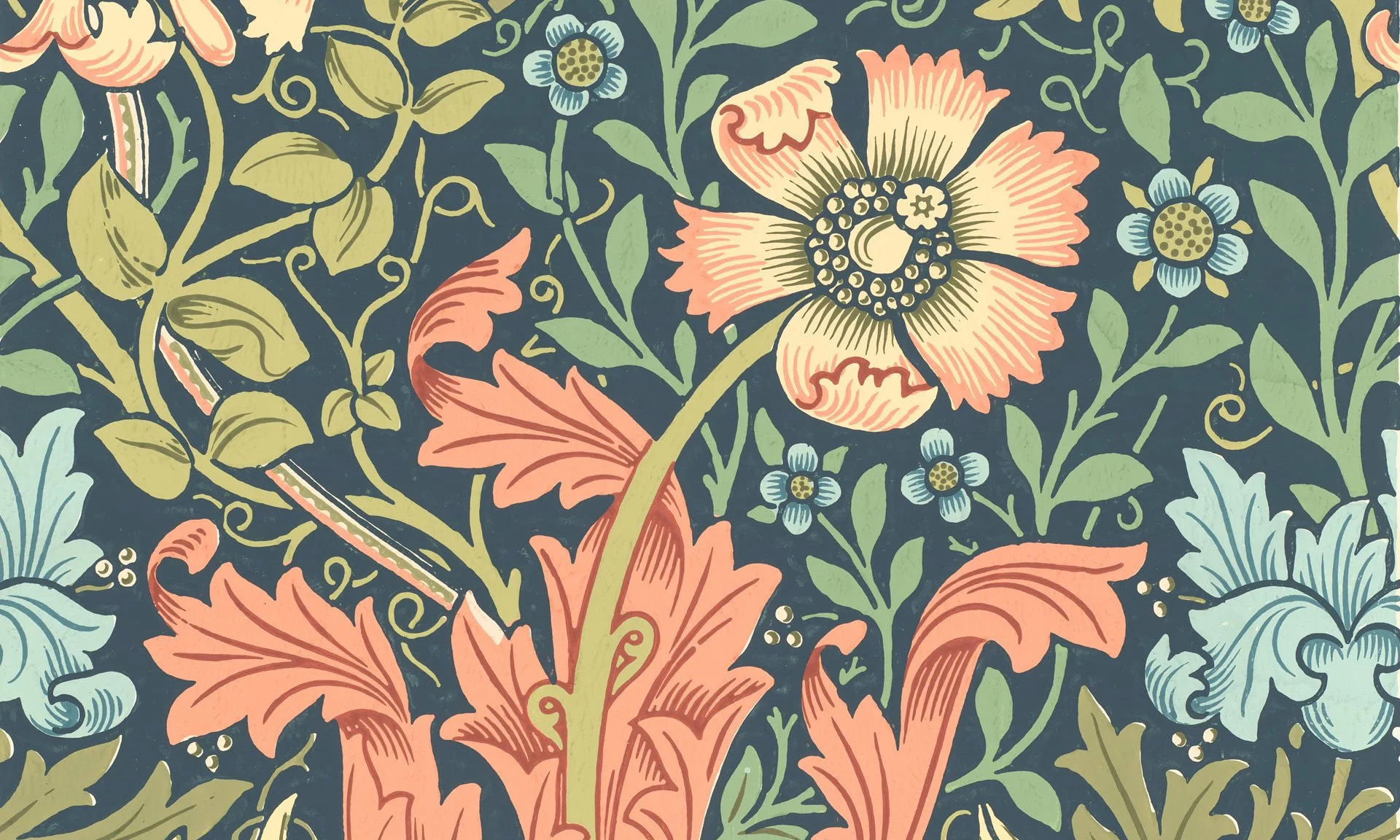
There are artists who influence your style, and then there are artists who influence the way you think. William Morris is both for me. In this post I want to introduce you to the designer behind some of the most iconic botanical patterns in art history — and share why his philosophy, written over 150 years ago, feels more relevant to me today than ever. This one goes a little deeper than flowers and builds on my previous thoughts about, “Why I Draw.”
Leader of the Arts and Crafts Movement
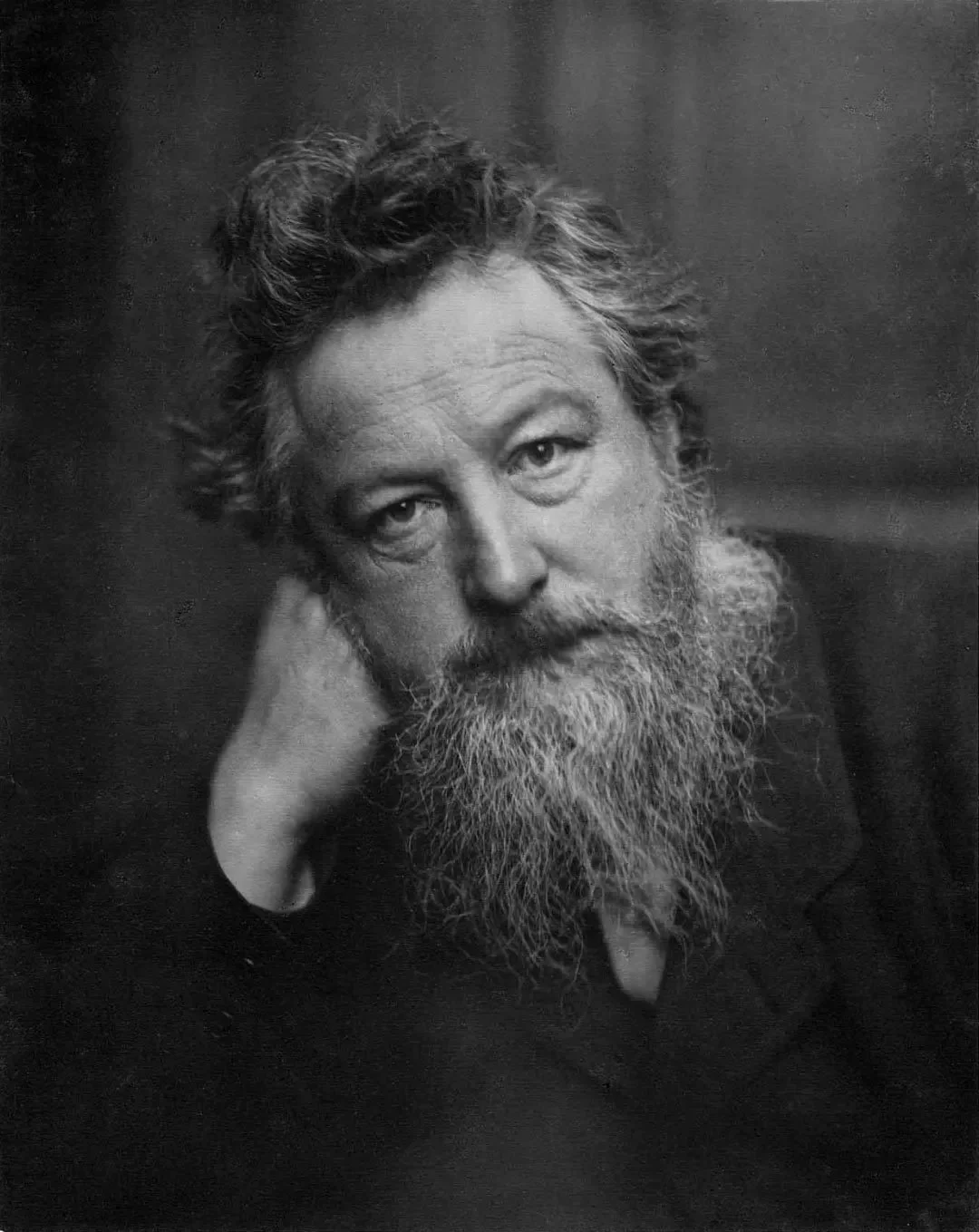
Each time I research a new botanical artist or see a different style of illustration, I envy the beauty they create and wonder what it would be like to draw like that. There are so many things over the course of our growth as illustrators that influence us, but from the beginning, there has been one individual whose style and philosophy I keep coming back to and that is William Morris.
At first, it was a fascination with the patterns, the colors, and the use of nature as themes in his designs. There was also something nostalgic and romantic about his work. The more I followed this path toward becoming a botanical artist, the more my curiosity about Morris grew.
I'm currently reading a book on Morris titled William Morris: His Life and Work by Stephen Coote. Initially, I simply wanted a book to reference his art, but the more I read, the more I was drawn in to his philosophy.
Morris believed that art should be handcrafted, intentional, and rooted in nature. He pushed back against a world racing toward mass production at the dawn of the Industrial Revolution and specifically for him, the 1851 Great Exhibition that championed the machine age. He argued that beauty wasn't a luxury but a necessity. That craftsmanship — items made by the human hand — wasn't inefficiency, but the only way.
These were thoughts he had over 150 years ago and they still resonate today. If you think about it, we are in the midst of a revolution of our own. The AI Revolution. A time where handcrafted art is being shoved aside in favor of AI slop. We are at another point in history where technology is threatening the value of human creativity. Where the value of human production is being minimized in favor of speed from machines. Sound familiar? But I digress (more on this later?).
There's a quote of his that I keep coming back to: "Wherever nature works, there will be beauty."
This simple phrase resonates with me and reinforces my belief that nature and art are forever connected. Nature wasn't just a motif for Morris but an essential truth in his work. He designed over 50 wallpaper patterns in his lifetime, each one built around flowers or foliage. The flowers weren't decorations layered on top of a design but they were the design. I can't help but feel a deep connection to what Morris felt about nature, and I feel I'm living that now through my art.
Nature is the Primary Subject
For me, drawing serves as a way to document nature's beauty with my own unique creative touch. I'm not trying to copy nature but interpret it and in doing so, I'm trying to amplify the beauty that flowers and nature contain. My goal is that you see that as well. That the style resonates with you, that it makes you feel something more about this connection to nature I'm sharing — but that we all need to have.
There is so much wonder in the natural world if you slow down to enjoy it. A singular flower growing at the edge of a trail. The morning light moving through a garden of zinnia. The unique beauty of the changing of the seasons. For the most part it is all free. Nature doesn't charge admission to experience some of the most life-altering experiences we can have. The lessons it can teach us, the beauty it provides is there for those willing to slow down and take it in.
It’s Worth Protecting
Given my appreciation for nature and flowers, I'm sure you know I have a deep passion for the environment and protecting it. Morris understood that too. He asked that question directly: "How can you care about the image of a landscape, when you show by your deeds that you don't care for the landscape itself?"
That question is as relevant today as when he wrote it. Unfortunately, recent studies estimate that 45% of the world's plant species are at risk of extinction. Nearly half of all plant life on earth. I recently did a series of Alpine and Michigan wildflowers. Those flowers grow in some of the most climate-sensitive locations on earth. When those habitats change, those flowers disappear. And when they disappear, something irreplaceable goes with them. We can't take nature's beauty for granted.
Morris wrote: "Artists cannot help themselves; they are driven to create by their nature, but for that nature to truly thrive, we need to preserve the precious habitat in which that beauty can flourish."
He wrote that during his lifetime but it reads like a warning written for today. My creativity is linked to nature and flowers, but it's also linked to my desire to protect and conserve the environment. Every time I draw a flower I'm making an argument that it's worth looking at — but also that it's worth preserving. It's quiet advocacy. But advocacy nonetheless.
What Does This Mean?
Morris gave me the language for something I already felt. In his philosophy I found a direct connection to the reasons I draw. Nature provides the most beautiful inspiration. I find value in creating art with my hands, with my creativity, and not through the use of machines. Nature is the source of that inspiration and it is worth protecting. Rooted in Morris is the foundation for why I am on this journey — and why that journey feels like it matters.
And for you, the reader, when you choose handmade botanical art, I think you are making those same statements as well. Nature matters and it is something to admire and protect.
On the surface, many see flowers, but there is so much more. Botanical art is more than decoration — it's a philosophy. Something that came to light through my interest in the patterns I love from William Morris but something that is a lot deeper than that — and that has defined me as an artist.
How do you feel about botanical art? Do you like William Morris or is there another artist in this space you admire? Let me know what you think. Send me an email or drop a comment below!